



In today’s fast-moving, complex business environment, leaders are under pressure to do more than just keep up. They need to think clearly, creatively, and ahead. So strategic thinking is no longer a periodic activity confined to annual retreats; it’s a continuous process that demands mental clarity, focus, and perspective.
But here’s the challenge. Most corporate environments aren’t designed for this kind of thinking. The day-to-day rhythm of office life, back-to-back meetings, constant notifications, and an always-on culture, chips away at a leader’s ability to rise above the noise and see the bigger picture.
That’s where the outdoors offers something powerful and increasingly essential.
Far from being a luxury or escape, spending time in natural environments is proving to be a high-value catalyst for clearer, more strategic thinking. And the science backs it up.
Strategic Thinking: Clarity, Focus & Mental Reset
One of the most significant barriers to strategic thinking is mental overload. Decision fatigue, distraction, and screen fatigue all deplete our capacity to focus. According to Attention Restoration Theory (Kaplan & Kaplan, 1989), natural environments help restore this depleted attention. They engage the brain gently – what psychologists call “soft fascination”- allowing the cognitive centres responsible for high-level thinking to rest and reset.
Studies show that even short periods of time spent in nature can improve working memory, concentration, and executive function.¹ ² This means leaders who intentionally step outdoors may find themselves better able to connect ideas, evaluate options, and make high-quality decisions.
In short, nature doesn’t just clear your head, it sharpens your mind.
Big Landscapes: Big-Picture Thinking
Strategic leadership is about seeing further, thinking longer-term, and making sense of complexity. The physical environment we occupy influences how we process information. And wide, open landscapes naturally promote what psychologists refer to as psychological distance.³
This distance allows leaders to mentally zoom out, move beyond the immediate issue, and consider broader contexts and future scenarios. Research has shown that exposure to vast natural settings such as mountains, coastlines, and open moors, can trigger feelings of awe, which are associated with expansive thinking, increased creativity, and openness to new ideas.⁴ ⁵
In practical terms, getting outdoors can help leaders:
- Reframe complex challenges
- Spot emerging patterns or risks
- Explore new strategic directions
- Shift from reactive to proactive thinking
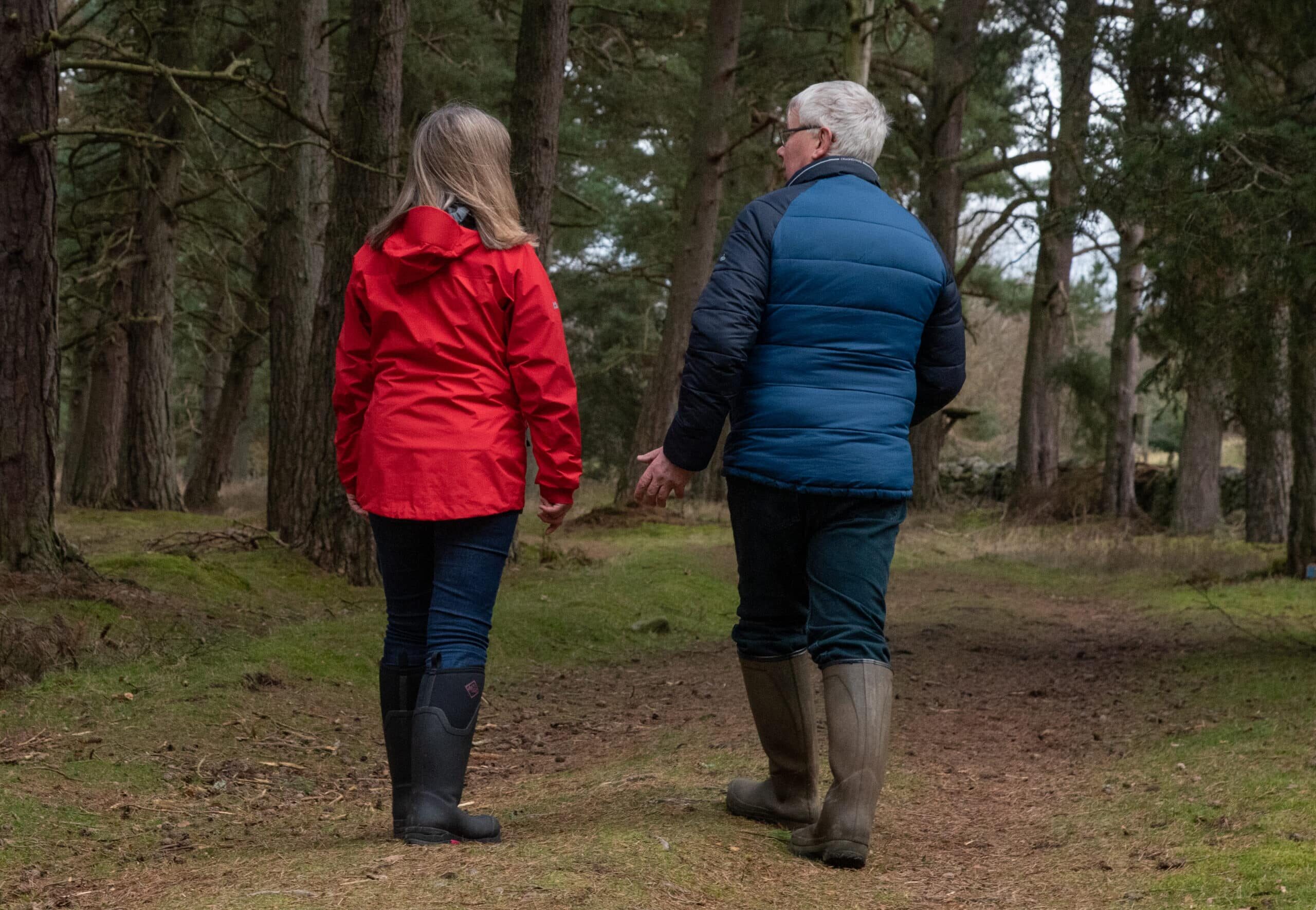
It’s no surprise that many leaders report their best ideas come while walking outside, not sitting in a meeting room.
A Strategic Asset. Not a Soft Option
Embedding the outdoors into leadership practice doesn’t require trekking across remote landscapes (although that helps). Even a 20-minute walk in a local green space can improve mental clarity and unlock fresh thinking.
For as we face increasingly unpredictable markets, technological disruption, and global change, leaders need every tool at their disposal to think strategically. Nature – free, ever-present, and proven, may be one of the most overlooked yet high-impact resources available.
It’s time to move beyond the boardroom and recognise the outdoors for what it truly is: a serious strategic asset for modern business leadership. A tool to facilitate regular strategic thinking, to help leaders and their teams to open up their minds to see and seize opportunities to keep them ahead of the curve – ahead of their competitors and the next challenge that comes bounding towards them.
It’s time to make ‘Outdoors a Habit‘!
References
- Kaplan, R., & Kaplan, S. (1989). The Experience of Nature: A Psychological Perspective.
- Berman, M. G., Jonides, J., & Kaplan, S. (2008). The cognitive benefits of interacting with nature. Psychological Science, 19(12), 1207–1212.
- Trope, Y., & Liberman, N. (2010). Construal-Level Theory of Psychological Distance. Psychological Review, 117(2), 440–463.
- Keltner, D., & Haidt, J. (2003). Approaching awe, a moral, spiritual, and aesthetic emotion. Cognition and Emotion, 17(2), 297–314.
- Atchley, R. A., Strayer, D. L., & Atchley, P. (2012). Creativity in the wild: Improving creative reasoning through immersion in natural settings. PLOS ONE, 7(12), e51474.


